Answer Series 3-in-1 (Grade 12; 2014 edition)
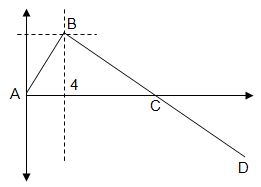
Page 1.56, exercise 9, number 1.2
The value for work done by friction must be substituted as -50 000 J. Answer is 2,53 m.
This site is maintained by Henry Welman, former provincial manager (2017-2022) and subject adviser (2001-2016) for physical and technical sciences in the Free State, South Africa. Currently retired, but interested in the well-being of teachers and learners involved in these subjects. Please read the disclaimer at the bottom of the posts.
Friday, 19 May 2017
Thursday, 18 May 2017
SAASTE conference 2017
Teachers of physical, natural and technical sciences, life sciences, agricultural sciences and earth sciences!
The SAASTE Conference will take place from 17 to 21 July 2017 at the University of the Free State in Bloemfontein. Depending on availability of funds and the number of interested parties, the plan is to sponsor teachers in the above-mentioned subjects with R900, accommodation and travelling. If you are interested, download the following material:
Submit your commitment form directly to Miss Nel as soon as possible, but on or before 16 June 2017. Arrangements for sponsorships and transport can only be made once the number of interested parties is known. Teachers who will be sponsored will still be responsible for their own membership fees to SAASTE.
You are also invited to participate as a presenter at this conference. The downloaded documentation gives the detail and if uncertain, contact the organisers directly.
The SAASTE Conference will take place from 17 to 21 July 2017 at the University of the Free State in Bloemfontein. Depending on availability of funds and the number of interested parties, the plan is to sponsor teachers in the above-mentioned subjects with R900, accommodation and travelling. If you are interested, download the following material:
Submit your commitment form directly to Miss Nel as soon as possible, but on or before 16 June 2017. Arrangements for sponsorships and transport can only be made once the number of interested parties is known. Teachers who will be sponsored will still be responsible for their own membership fees to SAASTE.
You are also invited to participate as a presenter at this conference. The downloaded documentation gives the detail and if uncertain, contact the organisers directly.
Labels:
Conference,
SAASTE
Tuesday, 9 May 2017
Provincial SBA moderation - May 2017 - Grade 10
The following schools were selected for provincial SBA moderation of grade 10.
Please ensure that material is prepared and submitted as required by the examination section.
Labels:
Grade 10,
Moderation,
SBA
Monday, 8 May 2017
Olympiad for grade 10
The first physical science olympiad for grade 10 will take place this year. Teachers have been informed about the way in which it will take place, but the official circular (LTA 10 of 2017) is available now. Please download it here and scrutinise in order to have the full details. The first phase, in which an olympiad question paper is written, will DV take place on 22 May 2017. The final phase, which will be a provincial quiz, will DV take place on 13 and 14 October 2017.
We see forward to this exciting event for our grade 10 learners. It is compulsory for all of them to write. All question papers will be provided to schools by the provincial head office.
Best wishes!!
We see forward to this exciting event for our grade 10 learners. It is compulsory for all of them to write. All question papers will be provided to schools by the provincial head office.
Best wishes!!
Wednesday, 26 April 2017
IBP broadcast schedule for term two (Update)
The schedule for regular IBP broadcasts was updated yesterday. Click here to download it.
Labels:
IBP,
Marking,
Memorandum,
Moderation
Thursday, 20 April 2017
IBP broadcast schedule for term two
The broadcast schedule for this term's IBP is available.
Click here to download the schedule for the examination preparation broadcasts (green cells) as well as memo discussions (turquois cells).
Labels:
IBP,
Marking,
Memorandum,
Moderation
Sunday, 16 April 2017
Quality of our lives: Something to think about!
Tomorrow is the end of the April school holidays and term two will commence on Tuesday.
It will obviously be a very busy term - as usual - for all of us in the teaching profession. Long hours, challenging work conditions, terrible amounts of paperwork and administration, and especially huge pressure on everybody, from school up to the provincial head office, involved in getting better results in grade 12; at least for those grade 12 learners who are going to sit for the final examinations in October/November.
Lately, I have often wondered for how long it will be necessary to pursue all the extreme measures to achieve better grade 12 results. Those who are going to sit for the final examinations in grade 12 have - apart from normal teaching hours - matric camps, extended hour programmes, extra classes, extra resources, TV/IBP lessons, community radio broadcasts, and other initiatives. All in the name of getting better results at the end of secondary school. What is wrong with our South African system and its people that sufficient success cannot be achieved with "normal" input, normal working hours, etc.?
The question could be asked: "Is there a healthy balance between work and the personal lives of teaching professionals?" What is the personal cost for an unhealthy balance between work and personal life? It is certainly something to think about. Recently an interesting article from the World Economic Forum appeared about the good balance between work and life in Denmark. The balance is actually the best in the world. I wonder how we compare with Denmark? The original article is available here, and a copy in the cloud is also available here with highlights of interesting parts.
Best wishes to all for term two!
It will obviously be a very busy term - as usual - for all of us in the teaching profession. Long hours, challenging work conditions, terrible amounts of paperwork and administration, and especially huge pressure on everybody, from school up to the provincial head office, involved in getting better results in grade 12; at least for those grade 12 learners who are going to sit for the final examinations in October/November.
Lately, I have often wondered for how long it will be necessary to pursue all the extreme measures to achieve better grade 12 results. Those who are going to sit for the final examinations in grade 12 have - apart from normal teaching hours - matric camps, extended hour programmes, extra classes, extra resources, TV/IBP lessons, community radio broadcasts, and other initiatives. All in the name of getting better results at the end of secondary school. What is wrong with our South African system and its people that sufficient success cannot be achieved with "normal" input, normal working hours, etc.?
The question could be asked: "Is there a healthy balance between work and the personal lives of teaching professionals?" What is the personal cost for an unhealthy balance between work and personal life? It is certainly something to think about. Recently an interesting article from the World Economic Forum appeared about the good balance between work and life in Denmark. The balance is actually the best in the world. I wonder how we compare with Denmark? The original article is available here, and a copy in the cloud is also available here with highlights of interesting parts.
Best wishes to all for term two!
Thursday, 30 March 2017
Dates for trial examination for grade 12 are available
These dates are available here. Follow the links at the bottom of the post.
Labels:
Assessment,
Date,
Examination
Tuesday, 28 March 2017
March 2017 control test: Gr 12 comments
As follow-up on today's memo discussion, here are some comments and further clarification of the marking memorandum.
Something on interpretations of vector and scalar answers
The aim with these questions in this control test was to emphasise that final numerical answers must be interpreted. It could help learners if they make it a habit to interpret answers. However, what do we do with the interpretation when the final numerical answer is not the same as the memo? Let's look at it by using two examples.
Q2.2: If the basic formula is correct, but the learner makes one substitution error, that substitution mark is lost and the mark for the final numerical answer is forfeited (two marks gone). Let's say the learner's final numerical answer is -7 m/s instead of the -2,13 m/s. If the learner's interpretation is now "vf = 7 m/s; west", the mark for the interpretation is given. Although the learner has made a mistake in doing the calculation, the learner can interpret the answer scientifically and for that we want to award him/her. So, this learners gets 2/4.
Q4.2.1: The learner, for example, makes a mistake in the substitution step (mark gone and mark for answer forfeited). Let us say the learner gets vf = -20 m/s. Then the interpretation should be "Speed = 20 m/s" and for that you award the interpretation mark.
The way interpretation marks are awarded might differ from paper to paper, but in this paper the mark for interpretation is basically done in the same way as when we apply "positive marking". However, we do not want to call it positive marking, because the term "positive marking" is actually applicable to one calculation going into another.
Lastly on interpretation: If the interpretation is about a scalar (height, speed) and direction is included in the interpretation, the mark for interpretation is NOT awarded.
Further comments on specific questions are as follows:
Q5.3
Accept Newton's second law of motion in terms of momentum. The mark allocation is as follows: The resultant/net force acting on an object (tick) is equal to the rate of change of momentum of the object (tick) in the direction of the resultant/net force (tick).
Q5.2
If a force diagram is given: Max ¾
Numbers as labels are not accepted.
Q4.3
Upward as negative is not compulsory in Q4.3. An alternative correct graph is as follows:
Q3.3.1
Final memo decision on this one. If a learner answers "-F", ignore the "-" and award the mark. We accept that the learner knows the magnitude is "F". Continue to mark the motivation part, and award marks as indicated in the memo.
Q1.1
Very unfortunate, we have to accept A & D. Option D slipped into this question. The statement is incorrect, because it is possible to tell what happens with acceleration, momentum and velocity at the highest point. Hence, D must also be accepted as an answer.
Something on interpretations of vector and scalar answers
The aim with these questions in this control test was to emphasise that final numerical answers must be interpreted. It could help learners if they make it a habit to interpret answers. However, what do we do with the interpretation when the final numerical answer is not the same as the memo? Let's look at it by using two examples.
Q2.2: If the basic formula is correct, but the learner makes one substitution error, that substitution mark is lost and the mark for the final numerical answer is forfeited (two marks gone). Let's say the learner's final numerical answer is -7 m/s instead of the -2,13 m/s. If the learner's interpretation is now "vf = 7 m/s; west", the mark for the interpretation is given. Although the learner has made a mistake in doing the calculation, the learner can interpret the answer scientifically and for that we want to award him/her. So, this learners gets 2/4.
Q4.2.1: The learner, for example, makes a mistake in the substitution step (mark gone and mark for answer forfeited). Let us say the learner gets vf = -20 m/s. Then the interpretation should be "Speed = 20 m/s" and for that you award the interpretation mark.
The way interpretation marks are awarded might differ from paper to paper, but in this paper the mark for interpretation is basically done in the same way as when we apply "positive marking". However, we do not want to call it positive marking, because the term "positive marking" is actually applicable to one calculation going into another.
Lastly on interpretation: If the interpretation is about a scalar (height, speed) and direction is included in the interpretation, the mark for interpretation is NOT awarded.
Further comments on specific questions are as follows:
Q5.3
Accept Newton's second law of motion in terms of momentum. The mark allocation is as follows: The resultant/net force acting on an object (tick) is equal to the rate of change of momentum of the object (tick) in the direction of the resultant/net force (tick).
Q5.2
If a force diagram is given: Max ¾
Numbers as labels are not accepted.
Q4.3
Upward as negative is not compulsory in Q4.3. An alternative correct graph is as follows:
Q3.3.1
Final memo decision on this one. If a learner answers "-F", ignore the "-" and award the mark. We accept that the learner knows the magnitude is "F". Continue to mark the motivation part, and award marks as indicated in the memo.
Q1.1
Very unfortunate, we have to accept A & D. Option D slipped into this question. The statement is incorrect, because it is possible to tell what happens with acceleration, momentum and velocity at the highest point. Hence, D must also be accepted as an answer.
Thursday, 23 March 2017
First control tests of 2017
Tomorrow is the first control test for all the grade 10 and 11 learners taking physical and technical sciences in the Free State. After the control test, there will be a short break, and then all of them engage in their formal practical tasks. On Monday it is time for the same things for grade 12.
To all our learners; best wishes!
![]() |
| (C): https://goo.gl/NFl0dv |
Labels:
Examination
Sunday, 12 March 2017
2017 edition of examination guidelines for grade 12 is available
The 2017 edition of the grade 12 examination guidelines are available. Click here to go to the page where you can download them.
Saturday, 11 March 2017
Newton's first law of motion: Excellent demonstration
Here is an excellent demonstration of Newton's first law of motion and inertia from Don Lincoln's Facebook page. Click here to go directly to the post.
Friday, 10 March 2017
Subject advisers at Umalusi
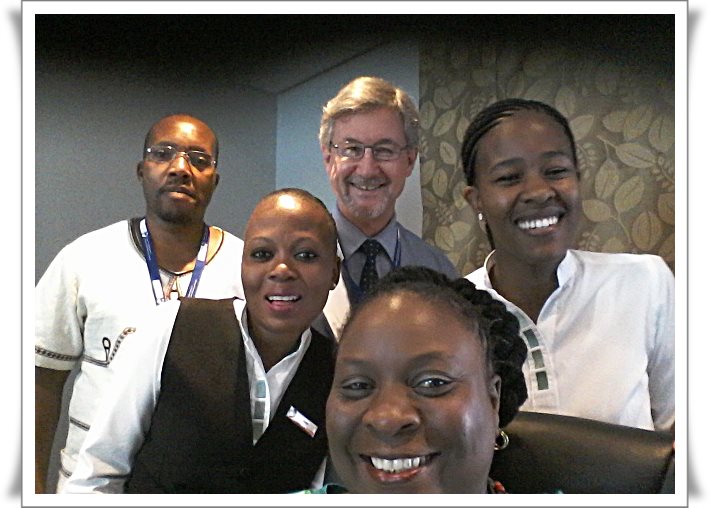
Mr Henry Welman and Mrs Madewa Zapi, two of the Free State subject advisers and two colleagues from North West, Mr Mosala Leburu and Mrs Boipelo Mathews, were invited to work on curriculum matters at Umalusi during the past week.
![]() |
| Front: Henry Welman, Madewa Zapi and Boipelo Mathews Back: Dr Stephan Mchunu from Umalusi and Mosala Leburu |
![]() |
| Hard at work with Mr Duma Sithebe (Umalusi curriculum manager) on the left. |
![]() |
| In the middle are the two ladies, Ongeziwe Sigingqini and Neo Maekane, who made sure there was enough coffee and something to eat. |
Labels:
Umalusi
Wednesday, 1 March 2017
Best wishes with supplementary examinations
Best wishes to all the learners who are going to sit for the supplementary examinations on 3 March (physics) and 6 March (chemistry)!
To help you with your preparation, watch the revision lessons on IBP on 1 and 2 March. The broadcast slots will be 8:15 to 11:15 and 14:30 to 16:30.
![]() |
| (C): https://goo.gl/NFl0dv |
Labels:
Examination,
Grade 12
Sunday, 26 February 2017
Timetable for control tests, practical tasks and examinations (2017)
The circular with available dates at this stage, distribution procedure and deadlines for the submission of marks to SASAMS for the above-mentioned can be downloaded here.
Wednesday, 22 February 2017
Dates for Free State provincial SBA moderation
According to a circular, the dates for the Free State NSC provincial SBA moderation are as follows:
Grade 10: 11-15 May 2017
Grade 11: 18-22 May 2017
Grade 12: 25-29 May 2017
Grade 10: 11-15 May 2017
Grade 11: 18-22 May 2017
Grade 12: 25-29 May 2017
Applications for Free State provincial SBA moderation
Applications are invited from persons who are interested in doing provincial moderation in May 2017. Information and application forms are available here.
Friday, 17 February 2017
Thursday, 16 February 2017
Friday, 3 February 2017
Application for marking: NSC December 2017
Applications for marking the above-mentioned is invited currently. The closing date is 28 February 2017. The relevant information and application forms are available here.
Labels:
Application,
Grade 12,
Marking
Subscribe to:
Posts (Atom)