
Monday, 30 January 2017
Friday, 27 January 2017
Science Unlimited 2017
The Science Unlimited roadshow takes place in Bethlehem on 21 and 22 February 2017. Click here for the programme and click here for information on how to make a booking.
Thursday, 26 January 2017
Expo 2017
\\\*** Nice opportunity! ***///
Teachers, are you uncertain about how to go about getting learners to do projects for the The Expo for Young Scientists? The local Expo committee will offer a teacher workshop on 8 February 2017 to help you with everything you must know.
Click here to get more detail and to register to attend.
Use this valuable opportunity!
Tuesday, 24 January 2017
Dates for formal assessment tasks for 2017
As soon as the dates for the common papers are available, it will be posted here.
Monday, 16 January 2017
Diagnostic report: 2016
An extract of the physical science diagnostic report for 2016 is available here. Download and scrutinise it to be informed about shortcomings and good approaches in learners' answers in the November 2016 examinations.
Sunday, 1 January 2017
Best wishes for 2017
**** Best wishes to everybody for 2017. ****
Make the best of new opportunities, despite disappointments we had in 2016.
Sunday, 25 December 2016
Merry Christmas 2016

May you have peace, joy, and all the best during Xmas season 2016. Spend time with things and people that are dear to you and bring joy to everybody in need of it! May you also have a wonderful 2017!
Friday, 16 December 2016
Vertical projectile motion videos
Another post deals with the idea of jumping out of the International Space Station. My aim was to give you some ideas to stimulate your learners into thinking about projectile motion, although our curriculum (unfortunately) does not require 2D projectile motion.
Nevertheless, when you address vertical projectile motion, there is a substantial set of interesting facts involved and showing learners a video of the real thing helps a lot (while we are living in the 21st century).
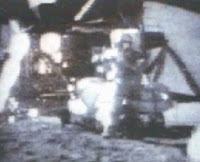 The first video, as far as I know, to show free fall on the moon was the one taken during the Apollo 15 mission that took place from 27 to 31 July 1971. Commander David Scott dropped a hammer and a falcon feather to show that two objects, one heavy and one light, drop at the same rate if there is "no" friction. Although the quality of the video is not good, it was an amazing resource to use in my classes during the early eighties when I started to use it. It is still unique (taken on the moon) and you can download a copy here (size 2,2 MB).
 Modern times bring more amazing video material and here is one you can download (21 MB). It shows an amazing facility in which a bowling ball and feathers are dropped in frictionless conditions; this time using high speed cameras to show the action in absolute detail. Compliments to the BBC for making such material to help physics teachers explaining abstract phenomena in our classrooms. Some advice though: Tell learners that the part following from 4:00 minutes deal with Einstein's relativistic motion and they should not mention any of that in their answers as we work with Newtonian mechanics!
 While we are busy with issues dealing with gravity, here is a video (145 MB) to show what it looks like inside the International Space Station when a cloth soaked with water is wrung out. The demonstration was based on a question directed to the astronauts and one of them demonstrated it during a video conversation with learners. Look at what happens when something is so called "weightless", what surface tension can do, etc. Amazing visuals!
Nevertheless, when you address vertical projectile motion, there is a substantial set of interesting facts involved and showing learners a video of the real thing helps a lot (while we are living in the 21st century).


Thursday, 15 December 2016
Jumping out of the ISS and free fall to Earth
 |
| (C) www.scienceabc.com |
This is an interesting discussion point to stimulate learners' thinking when we deal with vertical projectile motion. Here is a link to an interesting article on this.
Friday, 9 December 2016
John Glenn passed away

He was also the oldest human to venture into space when, at the age of 77, he went on a space shuttle mission in 1998.
A profile of John Glenn is available here.
Schools close for teachers for 2016
Today schools close for our teachers in South Africa. I hope that all of you will have a good period of rest during which you can replenish your energy. We all need time to recuperate. Best wishes!
Thursday, 8 December 2016
Beautiful memories and beautiful music
Do yourself the favour to go to this post on my FB page. From there, look at the video. It is so special! Today it came up as one of my good memories.
At 4:13 you see the remains, covered in perpex, of the space ship that had returned to Earth during one of the Apollo missions. If I remember correctly, this one is from the Apollo 11 mission, i.e. the one in which Amstrong, Aldrin and Collins had returned to Earth in July of 1969 after the first moon landing. This is the only part that returned to the earth from the 110 m high Saturn V rocket that had to lift everything against Earth's gravitational force. Remember that any object must have a minimum speed of 11,3 kilometre PER SECOND (read again!) before it can escape Earth's gravity. Perplexing technological miracles in the presence of heavenly music!
At 4:13 you see the remains, covered in perpex, of the space ship that had returned to Earth during one of the Apollo missions. If I remember correctly, this one is from the Apollo 11 mission, i.e. the one in which Amstrong, Aldrin and Collins had returned to Earth in July of 1969 after the first moon landing. This is the only part that returned to the earth from the 110 m high Saturn V rocket that had to lift everything against Earth's gravitational force. Remember that any object must have a minimum speed of 11,3 kilometre PER SECOND (read again!) before it can escape Earth's gravity. Perplexing technological miracles in the presence of heavenly music!
Pocket size mobile printer
How would you like to carry a small printer with you so that you can print any document anywhere from any device? Very soon it will be possible.
Zutalabs have developed a printer that can do this. With dimensions of a little more than 7 cm by 10 cm and a mass of about 350 g it is no problem to take it with you. Read more here and here.
Technology certainly make things interesting!
 |
| (C) http://www.zutalabs.com/ |
Technology certainly make things interesting!
Wednesday, 7 December 2016
Last mission to the moon
 |
| Left to right: Schmitt, Cernan (seated), Evans |
Saturday, 3 December 2016
Emoji
Have you ever wondered about emoji characters? Why we have them? Where do they come from? How many are there?
An interesting article appeared in Afrikaans on Netwerk24. If you want to read it, here is a pdf copy. The full set of current emoji characters is available here.
An interesting article appeared in Afrikaans on Netwerk24. If you want to read it, here is a pdf copy. The full set of current emoji characters is available here.
Wednesday, 30 November 2016
Technical sciences: Start-up meetings in 2017
The dates for the technical science start-up meetings in terms one, two and three in 2017 will be as follows:
Emails with the detailed invitation were sent to principals and teachers.
- 13 January 2017 (in Welkom)
- 21 April 2017 (in Bethlehem)
- 28 July 2017 (in Kroonstad)
Emails with the detailed invitation were sent to principals and teachers.
Monday, 14 November 2016
Comments on the grade 10 chemistry paper (P2)
Do you have any questions/comments related to the grade 10 chemistry paper?
Comments on the grade 10 physics paper (P1)
Do you have any questions/comments related to the grade 10 physics paper?
Thursday, 10 November 2016
Comments on the grade 11 chemistry paper (P2)
Do you have any questions/comments related to the grade 11 chemistry paper?
Comments on the grade 11 physics paper (P1)
Do you have any questions/comments related to the grade 11 physics paper?
Subscribe to:
Comments (Atom)